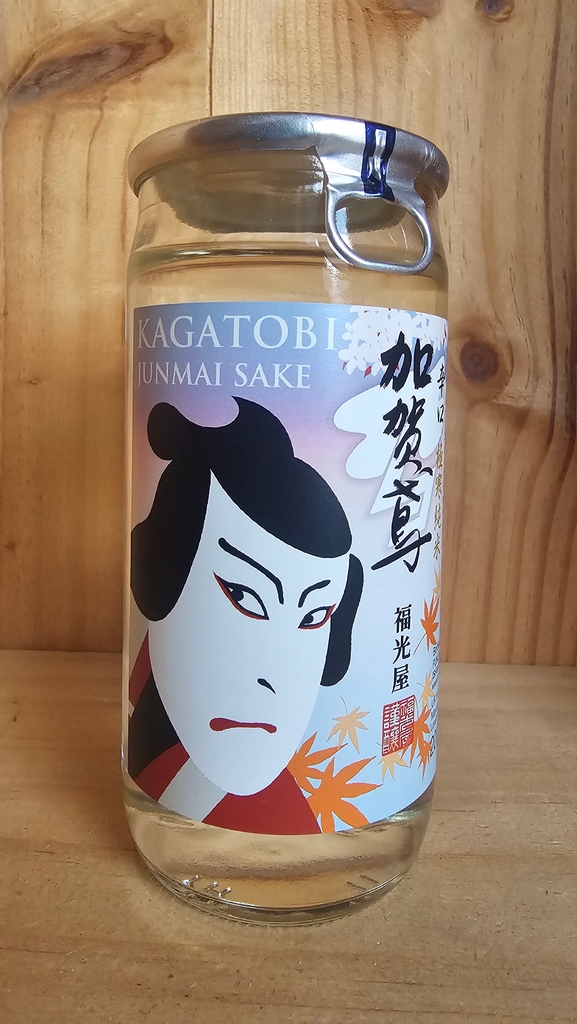
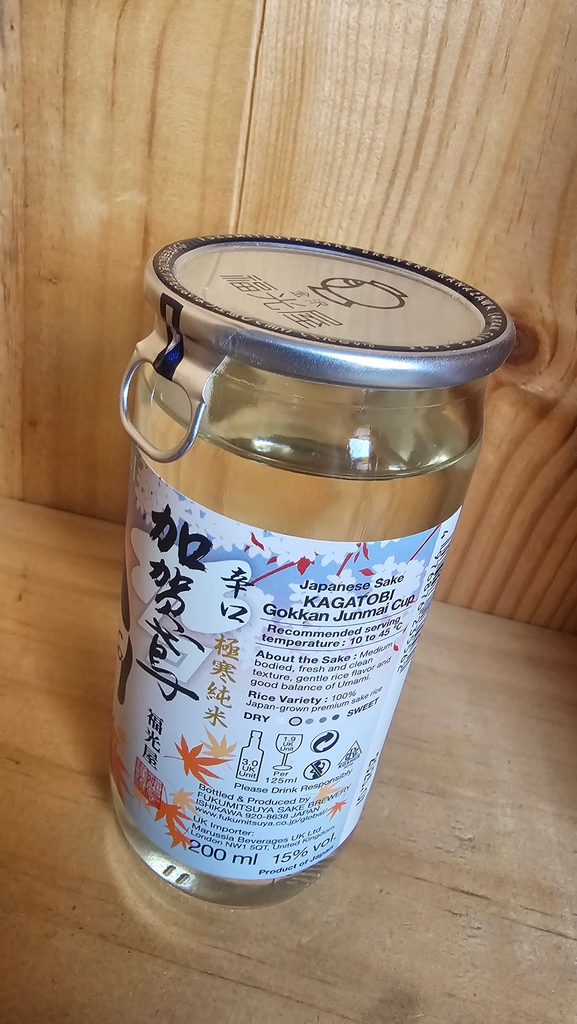
Kagatobi Gokkan Junmai Dry Sake Cup – a Japanese Junmai Dry Sake presented in a 20cl glass (or cup). Ideal for picnics, alfresco dining, stocking fillers or simply as a single-serve sake.
Category: Junmai
Style: Dry
Yeast: Kyokai No. 7
Rice: Yamadanishiki, Kinmonnishiki, Gohyakumangoku, Fukunohana
RPR (Rice Polishing Ratio): 65% – 35% of the outer rice is milled away
Alcohol: 15% ABV
The Fukumitsuya Sake Brewery was founded during the Edo period in 1625. It is located in Kanazawa, the capital city of Ishikawa Prefecture in central Japan. The brewery only produces Junmai Sake and is well-known for producing the finest Sake in the region. They make various Sakes under brand names including Kagatobi, Kazeyo, Kuroobi, Hatsugokoro and Momotose.
Junmai Sake is simply made with rice, koji, yeast and water. It is 100% unadulterated and contains no added distilled brewer’s alcohol. It is prized for its purity and ability to reflect the skill and quality of the brewer, as well as the quality of the rice. In fact, the name translates literally as “pure rice”.
This style of sake is typically characterised by a fuller body, a richer texture, more pronounced umami flavours and often slightly higher acidity.
Junmai sake is produced through a distinctive “multiple parallel fermentation” method, whereby saccharification and fermentation happen at the same time in open tanks at low temperatures, around 10°C. This makes winter the best season for brewing.
Kagatobi Gokkan Junmai Dry Sake is made solely from rice and water, the process starts by milling sake-specific rice to expose the starchy shimpaku core, followed by washing, soaking, and steaming. There is no official rice polishing ratio (RPR) for Junmai Sake, but most producers will polish to an RPR of 70% or lower. Fukumitsuya polishes the rice for this Sake to 65%, which helps deliver clean, crisp dryness with balanced umami.
Kagatobi sake is named after the legendary “Kagatobi” firefighters of the historic Kaga Domain (now Ishikawa Prefecture), who were known for their toughness, bravery, and fiery spirit during Japan’s Edo period. The name captures the sake’s bold, sharp, and powerfully crisp character, much like those heroic firefighters who battled blazes with skill and intensity.
Kagatobi Gokkan Junmai Dry Sake Cup offers a refined and balanced profile, demonstrating the purity of Junmai sake with gentle aromas of ripe fruit and steamed rice.
The nose is delicate and inviting with notes of ripe banana and apple, earthy hints of mushroom, subtle sour cream nuances and a touch of fresh herbs, creating a complex and refreshing bouquet.
This has a silky initial attack on the palate, followed by an agreeable umami richness. This gives way to a lively, fresh acidity, finishing dry with a gentle bitterness that adds depth and balance.
Food Pairing Suggestions
The dry, umami-rich profile of Kagatobi Junmai pairs beautifully with:
What does “Gokkan” mean?
“Gokkan” means “extreme cold”—referring to the slow, low-temperature fermentation (around 10°C) in winter, which enhances crispness, acidity, and umami while keeping it fresh and sharp.
What does a RPR (Rice Polishing Ratio) of 65% mean?
This means that 35% of the outer rice is milled away, producing a cleaner, more refined product.
How long will this Sake keep once opened?
Once opened, it is best to enjoy the full cup in one sitting to savour the freshest character of this Sake; however, it can be also be refrigerated once open and drunk within a day or two.
Serving Temperature
This style of Sake can be served chilled, at room temperature or warmed.
Cold: 8–12°C
Room Temperature: 15–18°C
Warmed: 40–45°C