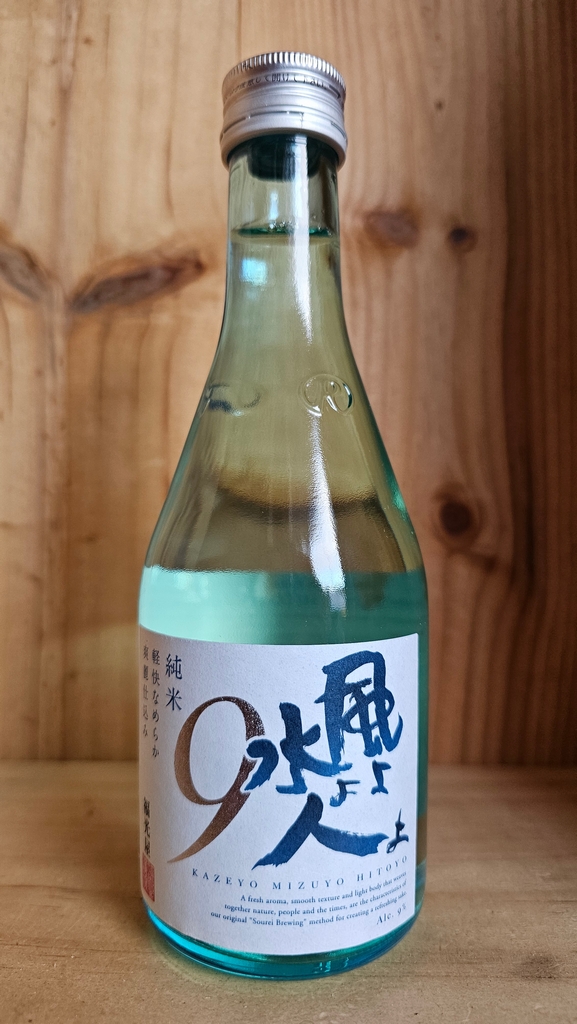
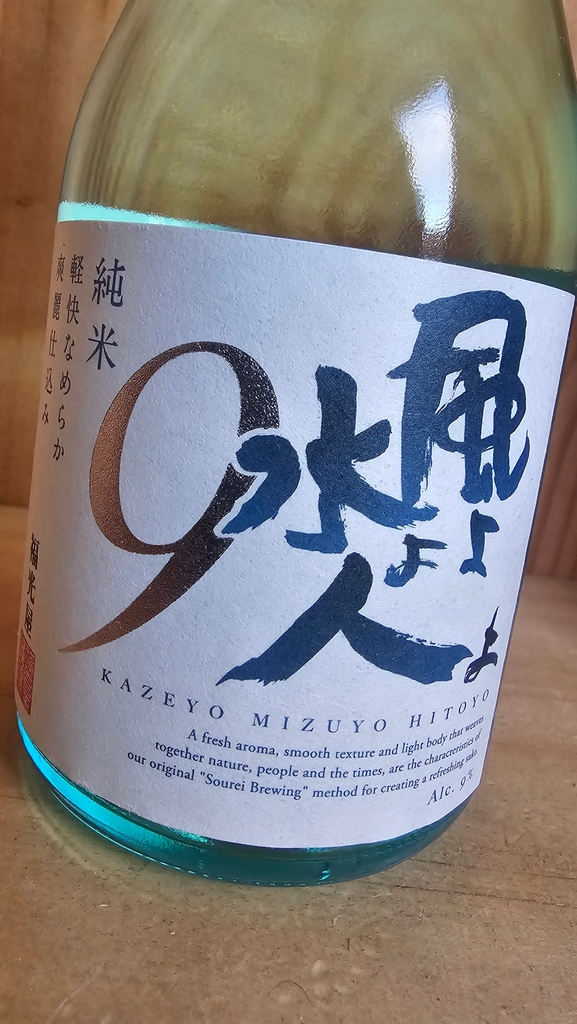
Kazeyo Mizuyo Hitoyo Junmai Sake is a Japanese Junmai Sake presented in a 30cl bottle. This is a light, clean and refreshing style of Junmai, made with the brewery’s proprietary ”FS9” yeast, which produces Sake with a lower ABV of 9%. This makes it lighter and more approachable than traditional sakes. A good Sake for beginners and for drinking in the warmer summer months.
Category: Junmai
Style: Light & refreshing, with mild / slight sweetness and crisp acidity
Yeast: Fukumitsuya’s unique ”FS9” yeast
Rice: Yamadanishiki
RPR (Rice Polishing Ratio): 70% – 30% of the outer rice is milled away
Alcohol: 9% ABV
The Fukumitsuya Sake Brewery was founded during the Edo period in 1625. It is located in Kanazawa, the capital city of Ishikawa Prefecture in central Japan. The brewery only produces Junmai Sake and is well-known for producing the finest Sake in the region. They make various Sakes under brand names including Kagatobi, Kazeyo, Kuroobi, Hatsugokoro and Momotose.
Junmai Sake is simply made with rice, koji, yeast and water. It is 100% unadulterated and contains no added distilled brewer’s alcohol. It is prized for its purity and ability to reflect the skill and quality of the brewer, as well as the quality of the rice. In fact, the name translates literally as “pure rice”.
While many junmai are fuller-bodied, this lower ABV version is intentionally lighter in style and easy-drinking.
Junmai sake is produced through a distinctive “multiple parallel fermentation” method, whereby saccharification and fermentation happen at the same time in open tanks at low temperatures, around 10°C. This makes winter the best season for brewing.
Kazeyo Mizuyo Hitoyo Junmai Sake is made solely from rice and water, the process starts by milling sake-specific rice to expose the starchy shimpaku core, followed by washing, soaking, and steaming. There is no official rice polishing ratio (RPR) for Junmai Sake, but most producers will polish to an RPR of 70% or lower.
Food Pairing Suggestions
Kazeyo Mizuyo Hitoyo Junmai Sake pairs beautifully with:
Serving Temperature
Can be served warm or hot, but it is best served chilled (5–15°C) to enhance the lightness and freshness.
What does “Kazeyo Mizuyo Hitoyo” mean?
It translates to “Wind, Water, People” and symbolises changing times, pure spring water (from Hakusan mountain springs) and the human connection.
What is the rice polishing ratio (RPR)?
70% (meaning 30% of the outer grain is milled away). This is standard for junmai and contributes to its clean, rice-forward character.
Is this a good for sake beginners? Yes. The low ABV, smooth texture, and lack of harshness make it far more approachable than fuller-bodied traditional Junmai.
How long does an opened bottle last? Like most sake, keep refrigerated and drink within 1 or 2 weeks.