


| Origin | |
|---|---|
| Main grapes | |
| Other grapes | |
| Bottle sizes | |
| Viticulture | |
| Vintage |
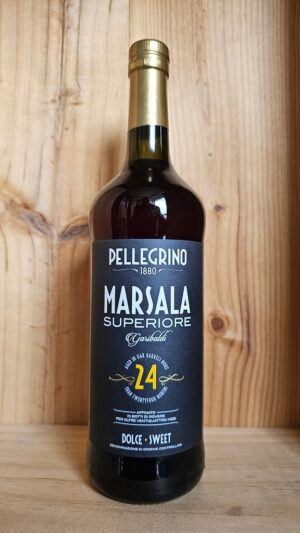
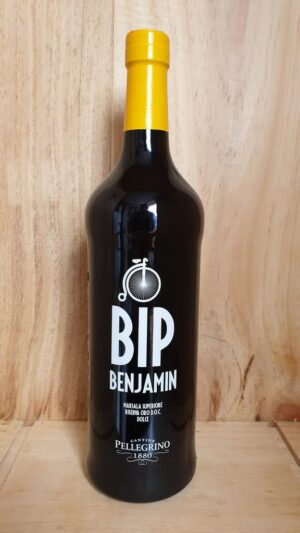
Cantine Pellegrino Marsala Superiore Old Dry is an aged, dry (or Secco) style of Marsala, perfect as an aperitif (or a dessert wine if you don’t like them too sweet) or as an ingredient in Italian savoury dishes like chicken or veal Marsala. For cooking desserts, use a sweeter Marsala like the Pellegrino Garibaldi Dolce.
Unlike other fortified wines, the creation of Marsala can be pinpointed to one man, an Englishman, John Woodhouse. Woodhouse was a connoisseur of Port, Madeira and Sherry and, when he arrived in the city of Marsala in 1770, it wasn’t long before he thought to try fortifying the local wines. In 1773, he added 8 litres of grape brandy to 400 litre barrels of wine, shipped it to England, and, effectively, Marsala was born. Marsala first received Denominazione di Origine Controllata (DOC) status in 1969.
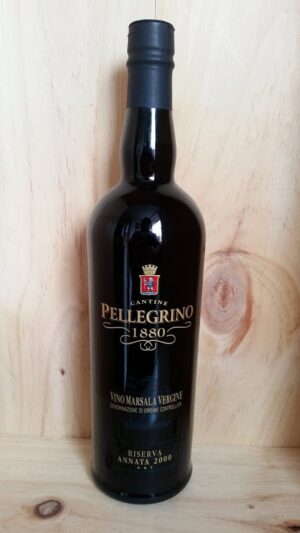
Today, Cantine Pellegrino, along with their competitors Cantine Florio, are recognised as the two top Marsala producers. Cantine Pellegrino came a little after Woodhouse. It was established in 1880 by Paolo Pellegrino and the company today remains in family ownership (one of only 2 to do so) and is one of only 3 Marsala houses founded in the 19th century that is still in existence.
Marsala wines come in a wide variety of styles, differing mainly in sweetness (from dry secco to semi-sweet semisecco and sweet dolce), ageing (often using a solera-like “in perpetuum” system similar to Sherry for blending and complexity, or static ageing in single casks), and ageing duration (from a minimum of 1 year for Fine up to 10+ years for premium Vergine/Stravecchio).
Most Marsala is produced from white grapes, resulting in golden (oro) or amber (ambra) colours, but a rarer ruby (rubino) style is made from red grapes. Pellergrino produce a rubino Marsala called Uncle Joseph.
Marsala Wine Production begins with a base wine: for drier styles, grapes are fermented to dryness; for sweeter ones, unfermented grape must is used or fermentation is halted early. The wine is then fortified with neutral grape spirit (or sometimes aged brandy) to boost alcohol to 15–20% ABV, and may include additions like mosto cotto (cooked must) for colour and sweetness in certain types. This creates a versatile, long-lived fortified wine perfect for sipping or cooking!
Read more about Marsala wines here.
Can be served lightly chilled as an aperitif or with desserts like apple tart and crème caramel.
It can also be served with savoury dishes like chicken or veal Marsala and aged cheeses

Reviews
There are no reviews yet.