

| Origin | |
|---|---|
| Main grapes | |
| Vintage | |
| Bottle sizes | |
| Viticulture |
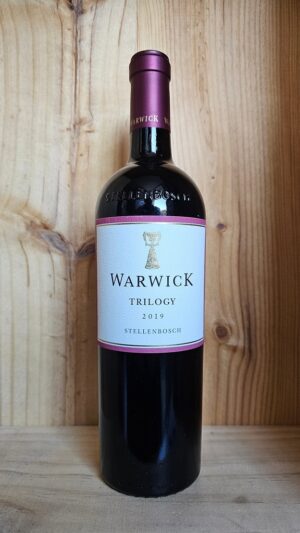
Warwick Estate Cabernet Franc is a single vineyard wine from this famous, family-owned and run wine estate located in Simonsberg, Stellenbosch. Warwick Estate is probably most famous for their Cape blend, the Warwick Trilogy, but their Cabernet Franc has got to be one of the best examples of Cabernet Franc from South Africa.
Warwick Estate has a long history. It was known as the De Goede Sukses Farm from 1771 until 1902 when it was bought by Colonel William Alexander Gordon, Commanding Officer of the Warwickshire Regiment decided against returning to England and bought the farm. He renamed it “Warwick” as a tribute to his regiment. The modern era of winemaking began when Stan Ratcliffe bought the estate on April 1st 1964. He was searching for the best vineyard sites in the Cape and, together with his new bride Norma, they soon realised the potential of the extraordinary property and began planting Cabernet Sauvignon.
The Cabernet Sauvignon vines produced high-quality grapes, which were soon in demand from neighbouring wineries. Norma became more and more interested in the making of wine and began to study the subject. Soon a cellar was in place and in 1984 the first “legal” Warwick vintage was released (a Cabernet Sauvignon). Stan and Norma’s son, Mike, the 3rd generation family member to oversee this high-quality boutique operation, ran the estate until 2017 when it was acquired by Eileses Capital, a San Francisco investment company. Today the company is run by CEO Christiana von Arnim. Mike Ratcliffe can be found at his new wine project, Vilafonté.
Warwick Estate Cabernet Franc is made from 100% Cabernet Franc grapes. They use 2 separate clones, CF 214b produces small berries, with good tannin and an herbaceous tone and allows for long maturation. The CF1 clone is grassier with berry notes and produces balanced wines. The soils are primarily Oakleaf, but the vineyard for the Cabernet Franc has more granite than their other vineyards, on which the Cabernet excels.
Winemaking
The nose bursts with violets and dried herbs, cassis, and dark chocolate followed on to the palate with notes of dark berries pomegranate, and cacao. The palate is structured around very fine-grained tannins, supported well by a dense core of fruit, and backed up by a fresh acid. Best enjoyed 7-10 years from vintage.
Drink with French-trimmed lamb with rosemary and thyme.
Reviews
There are no reviews yet.